I would like to get this out of the way: I am severely opposed to the use of AI in pretty much anything, especially if its use is not directly and exclusively data storage / analysis. However, for the Tuesday, Jan. 27 blog post for Digital History, we were asked to have AI write a 2-page paper, and create an image for us, and then to ask it to transcribe a document. The AI that I chose for this assignment was Microsoft’s Co-Pilot, since it is embedded in outlook and every other Microsoft service we use for school. This is that blog post:
The Essay
The Prompt: Create a downloadable PDF, 2-page, Chicago style essay with a bibliography section about the fall of Emperor Nero.
While this was probably easier (?) and definitely faster than if I had done the research and writing myself, it frankly was less enjoyable, and had a much less satisfactory outcome. Not only did it take more than one try to get Co-Pilot to format the essay properly and actually write 2 pages, the essay it created was subpar, at best. It’s the kind of stuff I feel like I write as a first draft, or maybe a final essay from middle school, not collegiate level writing, much less that of a history major.
The Photo
The Prompt: Generate an image of the fall of Emperor Nero.
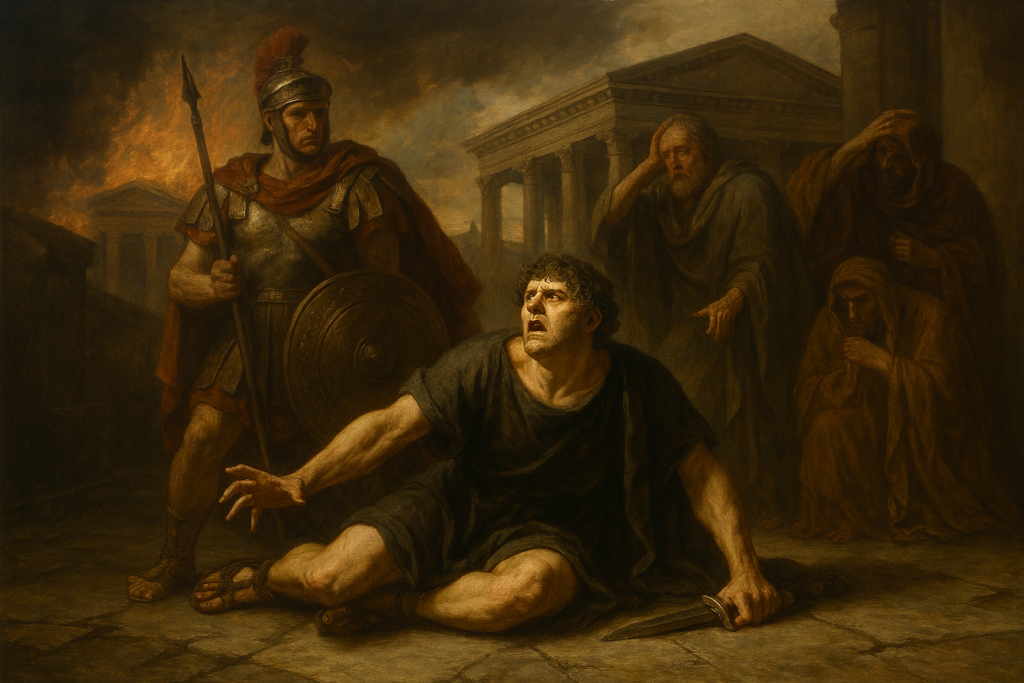
Of all the AI related tasks we had for this assignment, this one felt the most vile by far. Perhaps because of my background as an artist, or perhaps because I know that these models are fed on actual art and images created by human beings, but I frankly can’t stomach the idea of AI image generation as a good, helpful thing. I will not ever be doing this again if I can help it.
Images and paintings and sculptures already exist of historic events, and they have for hundreds of thousands of years. Why would anyone ever want to have AI generate something not only stolen, but in many cases anachronistic, if not completely inaccurate. As AI gets better and better at generating images like these, it gets increasingly more difficult for people to tell fact from fiction, which also makes it increasingly more difficult to truly understand the past.
Transcription
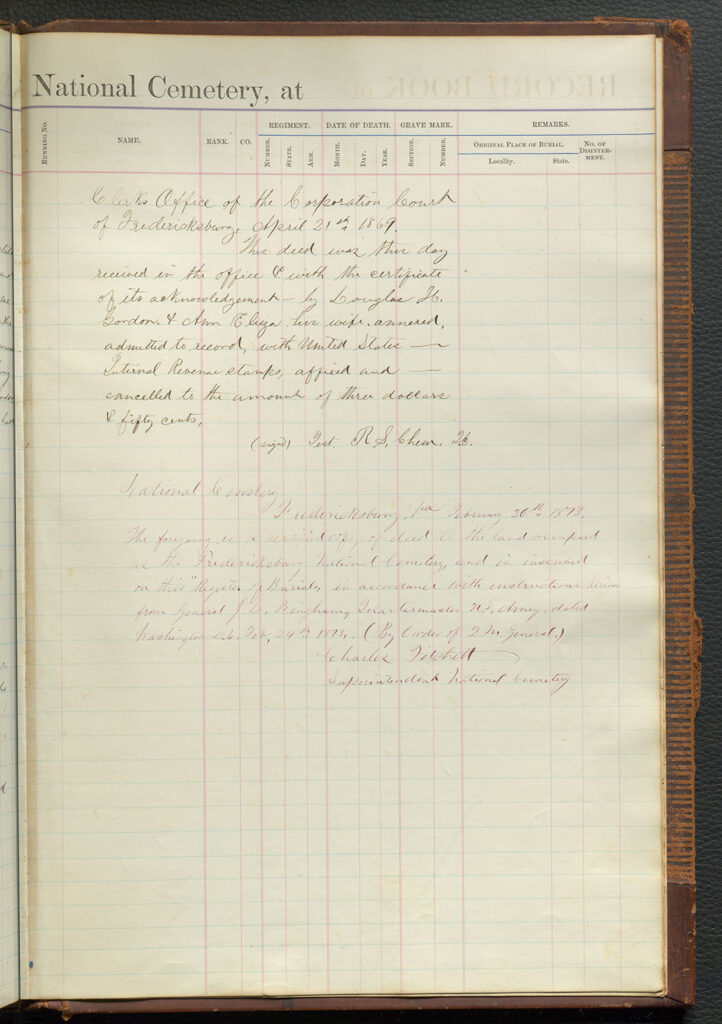
Written Page 4, Fredericksburg National Cemetery Register
The page I chose for the transcription part of this assignment was description page 4. Here is the transcription provided by Microsoft’s Co-Pilot:
The Prompt: Generate a transcription of this document. Generated, then asked for a cleaned, typed-up version.
Clerk’s Office, Corporation Court of Fredericksburg
April 12, 1867
The deed was this day received and duly recorded in Deed Book L, page 672, and examined. It is a true copy from the record.
In testimony whereof, I have hereunto set my hand this 12th day of April, 1867.
Landon B. Brooke, Clerk
Certified to be a correct copy.
Fee: Fifty cents.
R. A. Ashen, Lt.
National Cemetery, Fredericksburg, Virginia
December 26, 1867
The papers, of which the foregoing is a true copy, were presented to me on the 18th instant for my inspection.
I therefore certify that the within is a correct transcript of said deed.
Given under my hand at the National Cemetery, Fredericksburg, Virginia,
December 26, 1867.
(Number of graves: 3,449)
Charles C. Pile
Superintendent, National Cemetery
While this transcription is not completely terrible, and certainly could make the life of a historian a bit easier, it is a laborious, possibly more time consuming process to have to go through the whole thing anyway and check for mistakes.
Leave a Reply